Was Tim Keller a heretic? The very question would cause many today to recoil and think you’re crazy. “But he’s done so much good for the church. His books are so helpful. He was so articulate and smart.” Those things may be true. However, Keller also had some very aberrant theology that many Christians don’t know about.
Now, before you dismiss this, consider that we all have a tendency to favour teachers we like and overlook certain things. But even our favourite preachers and teachers can err in significant ways. Our only sure guide is Scripture. It is the standard to which we must measure all things (including this article).
Biblical discernment is never optional.
In the landscape of contemporary Evangelicalism, few figures have wielded as much influence as Timothy Keller. As the founder of Redeemer Presbyterian Church in New York City and a prolific author, Keller shaped the thinking of countless pastors, church planters, and laypeople through his books, sermons, and involvement in networks like The Gospel Coalition. His emphasis on urban ministry and cultural engagement brought renewed attention to reaching secular audiences with the gospel.
Even at our former church, the pastors would praise Keller as a jewel of Evangelicalism and a sound guide. To the average person in the pews in Evangelical churches, Tim Keller has been put forward as a great author, pastor, thinker, etc. Whole ministries and church models have been based on his writings and thoughts. People’s pastors quoted him in their sermons, they read his books in their small group studies, read his TGC articles, and maybe saw him at a conference or on video.
However, as with every teacher, we must test all things and hold fast to what is true (1 Thess. 5:21).
As Charles H. Spurgeon famously said,
“Discernment is not knowing the difference between right and wrong. It is knowing the difference between right and almost right.”
A closer examination of Keller’s teachings reveals areas where his theology diverges from historic orthodoxy. This divergence raises significant concerns with the influence of liberal theology, wokeness and questions of heresy. This article explores unorthodox or heretical elements in Keller’s beliefs, his role in shifting the church toward left-leaning political and social positions, contradictions with Reformed and conservative perspectives, and the negative impacts on the Reformed and Evangelical church.
Keller’s Unorthodox Theological Beliefs
Keller had a way with words. I don’t think anyone can deny that.
He was a good orator and could memorably turn a phrase. This is part of what made him an influential figure, but also part of what makes him dangerous. His skill to be articulate, compelling and “winsome”, and the fact that he did have a lot of true and good things to say mixed in with the errors, makes it sometimes difficult for the average layperson to discern.
The most dangerous false teaching is usually the most convincing and sweet-sounding.
Tim Keller’s theology has been scrutinized for presenting views that stray from biblical orthodoxy, particularly in core doctrines like the gospel, sin, hell, the Trinity, and creation. Critics argue that his attempts to make Christianity palatable to modern, secular audiences often result in diluted or distorted teachings. Jon Harris, in his series “Examining Tim Keller” on the “Conversations That Matter Podcast,” emphasizes this pattern, noting that Keller crafts a version of God that appeals to worldly sensibilities by downplaying attributes like wrath and elevating ones like love, which compromises essential doctrines.
Distortion of the Gospel
One major concern is Keller’s presentation of the gospel, which some see as implying alternative paths to salvation.
In an interview with Martin Bashir at The Veritas Forum in August 2011, linked to his book The Reason for God, Keller responded to the question of whether Jesus is the only way to God by saying, “God may have a trap door for unbelievers that ‘I haven’t been told about’.”
Wait… what?
Dr. Keller is a PhD and a pastor. He should know better. There is no ambiguity about this in Scripture.
However, Keller’s constant dodging to give a clear answer to the question is telling. It’s also not the only time he’s done it—this was his pattern in many of these sorts of engagements.

This statement suggests uncertainty about the exclusivity of Christ, contradicting clear scriptural affirmations.
Keller could have simply quoted verses such as John 14:6, where Jesus declares, “I am the way, the truth, and the life. No one comes to the Father except through me,” and Acts 4:12, which states there is “no other name under heaven given among men by which we must be saved.” What about Revelation 20:15, “And anyone not found written in the Book of Life was cast into the Lake of Fire.”
But Keller chooses evasion and equivocation instead of unapologetically declaring the truth. It often seems like Keller is ashamed of the gospel and unwilling to say what Scripture says.
Paul speaks to this in 2 Corinthians 4:2,
“But we have renounced disgraceful, underhanded ways. We refuse to practice cunning or to tamper with God’s word, but by the open statement of the truth we would commend ourselves to everyone’s conscience in the sight of God.”
Ministers of the gospel must not obfuscate, they must not dodge straight answers or try to be clever. God requires them to openly state the truth. If they’re unwilling to do so, they are unqualified to be ministers.
This is no peripheral issue. This is core to the qualification of a pastor and teacher of God’s Word.
Keller, even positing a “trap door” idea, implies that Christ died in vain, undermining the necessity of the cross. Notice also, in the full video, how Keller avoids saying “hell” when the questioner asks if people who don’t believe in Christ are going to hell. Instead, Keller says, “If they die and they don’t have Jesus Christ, I don’t know what happens to them.”
He doesn’t know what happens to them? Scripture is pretty clear about what happens to those who die without Christ.
Scripture says: “He who believes in the Son has everlasting life; and he who does not believe the Son shall not see life, but the wrath of God abides on him” (John 3.36). The Westminster Confession of Faith (Keller’s confession—since he’s supposed to be Presbyterian) says that at the Last Judgment: “The wicked, who know not God, and obey not the gospel of Jesus Christ, shall be cast into eternal torments, and be punished with everlasting destruction from the presence of the Lord, and from the glory of his power.” We’ll look at Keller’s beliefs on hell later in this article.
Perhaps most concerning in all of this is the utter lack of Scripture in Keller’s answers.
In fact, Keller’s approach twists scripture to accommodate secular presuppositions, such as those influenced by Harvie Conn, who advocated a “hermeneutical spiral” that integrates cultural contexts into biblical interpretation, denying objective exegesis. We will see later in this article how this issue of how Keller re-interprets Scripture becomes increasingly problematic.
I think the deficiencies in Keller’s gospel are due to his unbiblical reframing of sin.
Keller’s Reframing of Sin
At the heart of Keller’s theology is a redefinition of sin. This is massively important to the Gospel because if we misdiagnose the problem, we’ll also likely get the solution wrong.
If you love the Gospel and want to see people truly saved by it, then we must be clear about sin since we are calling people to repent of it. What do they need to repent of? Without a clear biblical definition of sin, there can be no clear Gospel call to repentance and faith.
The Westminster Larger Catechism (which Keller should affirm as a Presbyterian) says,
Q. 24. What is sin?
A. Sin is any want of conformity unto, or transgression of, any law of God, given as a rule to the reasonable creature. (1 John 3:4; Gal. 3:10, 12)
However, rather than primarily identifying sin as disobedience to the law of God (the traditional definition in most Reformed catechisms), Keller consistently reframes sin as idolatry—defined as building one’s identity or meaning on anything other than God. In a gospel summary, he states,
“Instead, we chose to center our lives on ourselves and on the pursuit of things rather than on God and others. This has led to the disintegration of creation and the loss of peace—within ourselves, between ourselves, and in nature itself. War, hunger, poverty, injustice, racism… and death are all symptoms.”
Sin, in this construction, becomes fundamentally self-centeredness: living for one’s own glory, fulfillment, or happiness rather than for God.
In the book Engaging with Keller: Thinking Through the Theology of an Influential Evangelical, the chapter on “Rebranding Sin” contends that Keller makes sin more palatable by defining it as replacing God in one’s identity. If you stop to think about it, this definition “fails to explain the cross” and obscures biblical consequences like eternal judgment. If the problem is just one of a person’s conception of their identity, then why does Jesus need to go to the cross? In The Reason for God (2008), he identifies original sin as “humanity’s inherent pride and self-centeredness.” Lita Cosner critiques Keller’s writing:
“Obviously, Keller’s view of sin is warped by his theistic evolutionary beliefs; in fact, he identifies ‘original sin’ not as due to Adam’s disobedience in Eden (as the Apostle Paul does in Romans 5), but as ‘humanity’s inherent pride and self-centeredness’” (p167)
We will touch on the problem of Keller’s beliefs in theistic evolution later. Now, while it is true that pride and self-centeredness are aspects of sin, they are not the primary reason for the seriousness of sin.
Sin is primarily against God. This is what makes it so offensive and severe.
“Against you [God], you only, have I sinned and done what is evil in your sight, so that you may be justified in your words and blameless in your judgment.” (Psalm 51:4)
This is why theologians like R.C. Sproul call sin “cosmic treason”. We, the created, have rebelled against our Creator—the One who gives us life, breath, and all things. There is no higher form of treason!
Keller explicitly acknowledges this reframing.
In an interview, he stated that he had to “rebrand” the word sin in his ministry context, particularly in Manhattan, where he perceived a cultural allergy to the traditional Christian teaching on sin. He found greater traction by emphasizing idolatry and enslavement rather than guilt and law-breaking. (Note that the reason for his reframing was not because it was more true to Scripture, but rather that it got more traction with people) Sin, in this scheme, is framed less as offence against a holy God and more as a strategy that harms the self and undermines human flourishing.
Keller’s own words and writings demonstrate a deliberate shift away from sin as violation of divine command toward sin as personal dysfunction.
While Scripture clearly condemns idolatry, as Jon Harris points out, Keller elevates it into the controlling category of all sin. In doing so, he absolutizes idolatry in a way that subjectivizes moral clarity. Idolatry becomes a nebulous condition—loving good things too much, seeking fulfillment in legitimate relationships or vocations, or feeling dissatisfied with life.
The problem with this approach is not that idolatry is ignored, but that it is mislocated. In Scripture, idolatry is a symptom of sin, not its root. Romans 1 presents idolatry as the result of suppressing the truth and forsaking the worship of the true God—acts which themselves are violations of God’s law.
Keller reverses this Pauline logic, making idolatry the causal engine of all wrongdoing and recasting concrete sins as secondary effects. By doing so, Keller conflates the consequences of sin with sin itself.
Unfulfilled identity, dissatisfaction, and lack of peace become indicators of sin, shifting the focus away from divine offence and toward personal experience. The gospel, in turn, is framed less as reconciliation with God and more as restoration of inner well-being.
This is a therapeutic gospel.
One of the most significant pastoral consequences of Keller’s theology is the erosion of the fear of God.
In Keller’s framework, fear is redirected from God toward the possibility of missing out on fulfillment or falling into idolatry that diminishes personal flourishing. This is a man-centred fear, not a reverent fear of the Lord rooted in His holiness, justice, and authority. The result is a pacified church—one less concerned with divine judgment, obedience, or reverence, and more concerned with balance, fulfillment, and emotional health. The law of God is softened, dulled, and often treated as an obstacle to an authentic relationship with Jesus rather than as an expression of God’s will for His people. Yet Christ Himself teaches that love for Him is demonstrated by obedience to His commandments.
Another example is Keller’s public response to questions on homosexuality at Columbia University. While affirming that homosexuality is not God’s original design, Keller consistently softens the biblical category of sin, reframing it in terms of brokenness and relational failure rather than clear moral transgression. Keller suggests that homosexuality is a sin not because it offends God but because it hinders “human flourishing,” reducing sin to a pragmatic concern rather than a moral rebellion warranting divine wrath. He repeatedly says that “homosexuality will not send you to hell” and instead reframes that “what sends you to hell is self-righteousness”. The Bible clearly says otherwise:
“Do not be deceiving yourselves: Neither the sexually immoral, nor idolaters, nor adulterers, nor ‘soft men’ (malakoi), nor men who lie with a male (arsenokoitai), nor thieves, nor greedy defrauders, not drunkards, not those who viciously slander others, not robbers, shall inherit the kingdom of God” (1 Cor 6:9-10).
If a man cannot give straight answers to gay questions, he has no business standing behind the pulpit.
While perhaps motivated by a desire to love and persuade, this approach avoids the sharp edge of biblical law and replaces it with ambiguity. The concern is not that Keller outright denies biblical teaching, but that he consistently reframes it in ways that minimize offence at the cost of clarity.
Keller rebrands sin to avoid offending secular audiences and aligns with his broader strategy of softening doctrines to appeal to urban elites.
Keller’s Distortion of Hell
Related to sin, Tim Keller’s doctrine of hell represents not a mere difference in emphasis, nor a benign attempt at contextualization, but a substantive departure from historic Christian orthodoxy.
His teaching systematically reframes the biblical doctrine of hell in a way that makes it palatable to postmodern sensibilities, while simultaneously undermining the biblical portrait of God as a righteous judge who actively punishes sin. This approach mirrors Keller’s treatment of other doctrines and reveals a consistent pattern of doctrinal revision motivated by cultural accommodation.
The Biblically Orthodox Doctrine of Hell
Since many churches today don’t teach a fully biblical doctrine of Hell, it’s worth briefly summarizing what Scripture teaches first.
Any orthodox doctrine of hell must begin with the biblical revelation of God as judge. Scripture consistently presents God as one who actively judges sin, not merely as a passive observer who allows consequences to unfold naturally. “God Himself is Judge” (Psalm 56). Christ is appointed by God as “judge of the living and the dead” (Acts 10:42), and God “has fixed a day in which He will judge the world in righteousness” (Acts 17:31). Hebrews declares plainly, “It is a terrifying thing to fall into the hands of the living God” (Heb. 10:31).
This judgment is public, decisive, and final.
Ezekiel speaks of God setting His glory among the nations through visible acts of judgment. The Westminster Confession of Faith rightly includes God’s judicial office among His divine attributes. Without this starting point—God as an active, volitional judge—the doctrine of hell collapses.
Scripture further affirms that hell is a real place of punishment. Jesus speaks of “the eternal fire prepared for the devil and his angels” (Matt. 25:41). He warns that God has authority “to cast into hell” (Luke 12:5). Paul describes “eternal destruction away from the presence of the Lord” (2 Thess. 1:9), and Revelation speaks of unending torment whose smoke rises forever (Rev. 14:11).
These texts are not symbolic placeholders awaiting reinterpretation; they are plain declarations of divine judgment.
The biblical record consistently portrays judgment as something God does, not something sinners inflict upon themselves.
From the Flood to Sodom, from the Exodus to Korah’s rebellion, God intervenes directly to punish evil. Romans 9 explicitly affirms God’s sovereign right to demonstrate His wrath and to prepare vessels for destruction. Sinners do not choose their punishment; it is imposed by a just Judge.
Jesus’ own words confirm this reality. Those condemned at the final judgment protest their sentence; they do not welcome it (Matt. 7:22–23). Christ asks, “How will you escape the sentence of hell?” (Matt. 23:33). Hell is not embraced as a preferred alternative to heaven; it is feared, resisted, and suffered. Scripture does not indicate that the damned are content, autonomous agents who calmly select eternal misery over submission to God.
Now, this sets us up to understand why Keller’s redefinition of Hell is so problematic.
Keller’s Watered-Down Hell
Against this backdrop, Keller introduces an alternative conception of hell designed to appeal to modern sensibilities. He portrays the traditional understanding of hell as a caricature—a “travesty”—in which God cruelly throws pleading souls into a pit. In contrast, Keller defines hell as the loss of God’s presence, a self-chosen state resulting from human freedom.
Keller’s teachings on hell are influenced by C.S. Lewis and George MacDonald, presenting it as a self-chosen state rather than divine judgment. He claims, “Hell is simply a natural consequence of rejecting God,” and “no one ever asks to leave hell,” drawing from the parable of Lazarus and the rich man. Keller asserts that hell is “locked from the inside,” that sinners freely choose it, and that God’s final act is simply to “give them up” to what they most desire—freedom from Himself. Hell becomes “a freely chosen identity based on something else besides God going on forever.”
In this scheme, sin itself is the punishment, and divine judgment fades into the background.
This is incompatible with biblical teaching that God condemns sinners (e.g., Romans 9:19-22 on vessels of wrath). It opposes penal substitutionary atonement and renders the cross unnecessary. In “The Importance of Hell” (2008), Keller writes,
“Hell begins with a grumbling mood, always complaining, always blaming others… but you are still distinct from it. You may even criticize it in yourself and wish you could stop it. But there may come a day when you can no longer.”
This downplays God’s active role in judgment, as in the flood or Sodom. Harris, in his episode on hell, reinforces this by highlighting Keller’s reliance on Lewis’s The Great Divorce, where hell is portrayed as a self-imposed isolation rather than God’s righteous punishment. Keller conflates sin with punishment, treating eternal suffering as the natural outworking of autonomous human choice rather than as the execution of divine justice. He misuses Romans 1 to support this framework, even though the passage refers to God’s temporal restraint of sinners before final judgment, not the nature of eternal punishment itself.
Many Christians today have bought into this redefinition of hell because it is softer and more palatable. It doesn’t offend their sensibilities as much and seems easier to stomach. However, if we want to be like Jesus, he spoke more than anyone else about hell and the eternal wrath of God. In Matthew 25:46, eternal punishment is decreed by Christ Himself. Christians must not try to be nicer than Jesus. But more importantly, we must be faithful and unashamed of his words.
“For whoever is ashamed of me and of my words, of him will the Son of Man be ashamed when he comes in his glory and the glory of the Father and of the holy angels.” (Luke 9:26)
Unbiblical and Illogical
When we stop and think about it a little more, Keller’s analogy of hell collapses under scrutiny.
Criminals choose to commit crimes, but they do not choose prison. The punishment is imposed by an external judicial authority. Likewise, sinners choose sin, but Scripture nowhere teaches that they choose hell itself. The suggestion that sinners willingly lock themselves into eternal torment contradicts both biblical testimony and basic human experience.
Moreover, Keller’s view raises unanswerable questions.
If hell is merely self-chosen separation, how does this apply to Satan and the demons, for whom hell was originally prepared? Are they simply left alone as well? Keller’s framework cannot consistently account for God’s judgment of spiritual beings without abandoning its central premise.
In Keller’s construction, hell becomes less a place of divine punishment and more a psychological or existential condition. Sin is likened to a fire consuming one’s life, producing misery both now and in eternity. Hell begins in this life and continues beyond death as a state of disintegration, insanity, and self-absorption. This portrayal minimizes God’s role almost entirely. Also, what about those who never reap the negative consequences of their sin in this life? Do they get to skip out on hell?
In Keller’s view, humans are the primary actors; God is distant, passive, and largely uninvolved. Yet Scripture depicts hell as the outpouring of God’s wrath, not merely the continuation of inward decay. Keller’s attempt to balance rational choice with psychological collapse only deepens the incoherence: are the damned rational agents choosing their fate, or are they insane prisoners of self-deception?
Ultimately, Keller’s doctrine strikes at the character of God Himself. It denies the biblical teaching that God actively exercises wrath against sin. It undermines divine justice by suggesting that God does not sentence sinners, but merely allows them to drift into self-chosen misery. In doing so, it replaces the fear of God with therapeutic reassurance.
The implications are far-reaching. If God does not pour out wrath in hell, why was penal substitution necessary? Why did Christ endure the cross if eternal punishment is merely self-inflicted alienation?
Keller’s doctrine destabilizes the atonement by removing the very wrath Christ came to bear.
The result of Keller’s doctrine of hell is a diminished fear of God, reduced urgency of repentance, and a hollowed-out gospel. Sinners are encouraged to see themselves as autonomous agents navigating life choices rather than as rebels accountable to a holy Judge. Hell becomes an unfortunate preference rather than a dreadful sentence.
Keller’s Unorthodox View of the Trinity
Tim Keller also had an unorthodox view of the Trinity called “Social Trinitarianism” with very concerning ties to liberal theology.
Social trinitarianism (a doctrine of liberal theology) presents the Trinity primarily as a community of three centers of consciousness bound together by mutual love, relationship, and shared activity. Rather than grounding divine unity in one essence or substance, this view increasingly locates unity in relational dynamics, often summarized through metaphors such as “dance,” “circle,” or “orbit.”
Catholic theologian Karen Kilby describes it as the dominant strategy on the Trinity since Jürgen Moltmann’s The Trinity and the Kingdom of God (1980), to emphasize its supposed social implications—how the Trinity models human community, inclusion, and relational harmony. In an age preoccupied with belonging, acceptance, and identity, social trinitarianism presents a God whose inner life mirrors contemporary therapeutic and social ideals. Keller’s formulation must be understood within this movement. While he represents a milder and more restrained expression than figures like liberal theologian Richard Rohr, the underlying framework is the same, and its trajectory is no less concerning.
In The Reason for God, he describes the Trinity as a “divine dance” of mutual glorification, where “each of the divine persons centers upon the others. None demands that the others revolve around him. Each voluntarily circles the other two, pouring love, delight, and adoration into them.” Keller repeatedly describes the Trinity as a “dynamic, pulsating dance of joy and love,” emphasizing voluntary deference among the divine persons. Even at Redeemer Presbyterian Church, a 2017 ballet performance (Life Together)—three dancers circling—was meant to mirror Keller’s analogy. This reduces the ineffable Trinity to effeminate choreography, lacking order and distinction.
This “divine dance” theology did not emerge in a vacuum. There are very concerning liberal theological roots. Steve McVey’s Beyond an Angry God portrays the Trinity as a “divine dance” humans lost through the Fall but can rejoin via redemption. McVey claims humanity is a “form of God” gone wrong, with the gospel proclaiming universal inclusion in Christ’s work—accept or reject it, but it’s already done. The gospel becomes “what already is in Jesus Christ,” echoing a man-centred message devoid of law-breaking and judgment.
Thus, this redefinition of the Trinity fundamentally alters the classical doctrine of God.
But what is the correct, biblical and historic definition of the Trinity?
The Historic Orthodox Doctrine of the Trinity
Historically, the church has confessed that the Trinity is one God in essence, not one God by agreement, cooperation, or shared affection. That is, God is one “what” and 3 “whos”. This is a traditional Trinitarian orthodox belief that has been affirmed for centuries. The Nicene Creed (325 AD) and later confessional formulations insist that unity lies in substance, not in love as an activity.
Love is an attribute of God, not the essence that replaces substance.
By redefining unity as love-in-motion, Keller collapses God’s being into God’s activity. This move risks portraying God not as the eternal, self-existent “I AM,” but as a process, an ongoing relational event. (Hence why this doctrine often pops up in liberal theology or process theolog,y which asserts that God can change… hence is “in process”) Such a conception cannot sustain the immutability and simplicity of God affirmed by historic Christianity.
A central concern is Keller’s rejection—explicit or implicit—of order within the Trinity. Scripture and orthodox theology affirm an order that is not hierarchical in worth, but real and essential: the Father is unbegotten, the Son is eternally begotten of the Father, and the Holy Spirit eternally proceeds from the Father and the Son.
This ordering is not trivial or unimportant. It undergirds the entire economy of redemption.
The Father sends the Son; the Son obeys the Father; the Spirit applies the work of Christ. Keller’s language of “mutual deference” obscures this biblical reality. Deference is voluntary and interchangeable; obedience is not. Scripture speaks of Christ’s obedience to the Father, not His polite willingness to step aside. When this ordering is flattened into reciprocal deference, the distinctions between Father, Son, and Spirit begin to blur. The persons risk becoming interchangeable, carbon-copy centers of consciousness, rather than distinct persons distinguished by their eternal relations of origin.
By emphasizing three centers of consciousness united by love rather than one essence shared by three persons, Keller’s view opens the door to tritheism.
Cornelius Plantinga, one of Keller’s primary influences, explicitly advances a social trinitarian model that risks collapsing into three beings instead of one being in three persons. While Keller himself does not affirm tritheism, theological systems are judged not only by their intentions but by their implications. When divine unity is relocated from substance to relationship, the distinction between one God and three gods becomes increasingly difficult to maintain.
Consequences of Keller’s View of the Trinity
Furthermore, Keller’s trinitarian framework does not remain confined to abstract doctrine; it reshapes the entire redemptive narrative. In Keller’s telling, creation is participation in the divine dance, the Fall is humanity “losing the dance,” salvation is re-entry into the dance, and the eschaton is the dance fully restored.
C. Baxter Krueger’s The Shack Revisited and The Great Dance extend this, making the cosmos a “sacrament” of the trinitarian dance. Endorsed by The Shack‘s author (a heretical work rife with trinitarian errors), Krueger integrates creation into the divine flow, blurring Creator-creature distinctions. Darrell Johnson’s Experiencing the Trinity frames sin as foolishly turning from our relational purpose, with redemption restoring the “dance at the center of the universe.” Feminist theologians and universalists embrace it too, but Franciscan monk Richard Rohr’s The Divine Dance exemplifies the extremes.
By portraying the Trinity as a non-hierarchical “community of love,” Keller aligns with contemporary self-help trends, such as those in books like The Divine Dance by Richard Rohr, which promotes a therapeutic God over the sovereign, holy Triune God of Scripture. This view elevates human relational ideals above divine revelation, leading to a God who is more a cosmic therapist than the Judge of all the earth. Rohr posits a “fourth” element—creation—completing the Trinity, with “flow” (akin to Keller’s “dance”) as God’s essence. He deems the space between persons “feminine,” diminishing masculine attributes to appeal to a wrath-averse culture. Rohr’s view devolves into New Age mysticism: the Trinity as “activity” rather than being, incomplete without humanity.
If this all sounds super weird, that’s because it is. Something smells fishy because it’s a rotten distortion of God.
This framework softens the biblical account of sin. Sin becomes primarily self-centeredness or alienation rather than rebellion against a holy God. Repentance and faith are displaced by realization and participation. The gospel subtly shifts from rescue from divine wrath to therapeutic reintegration into divine community. This shift has real implications. Keller consistently elevates attributes of God that modern audiences find palatable—love, acceptance, belonging—while downplaying those that offend contemporary sensibilities, such as wrath, judgment, and justice. The Trinity itself becomes a tool for meeting psychological and social needs rather than the object of reverent worship. This also aligns with wider cultural currents that resist masculine authority, moral absolutes, and hierarchical order.
By recasting God as a non-authoritative, relational community, Keller presents a deity more compatible with late-modern sensibilities—but less recognizable as the God confessed by the church through the ages.
When the doctrine of the Trinity is reconfigured—when essence is replaced by activity, order by mutuality, obedience by deference—the result is not a harmless metaphor but a different conception of God. And a different god cannot save.
Keller’s teaching, though mild in tone and appealing in presentation, participates in a movement that ultimately undermines Nicene orthodoxy. The “divine dance” may sound beautiful, but it lacks the biblical structure, theological precision, and reverent restraint demanded by so central a doctrine.
The church does not need a Trinity redesigned for modern tastes. It needs to recover the fear, humility, and clarity with which Scripture and historic Christianity speak of the one true God: Father, Son, and Holy Spirit—one in essence, ordered in relation, and sovereign in redemption.
Tim Keller’s trinitarianism, embedded in social trinitarianism, is not orthodox. It distorts God’s essence, erodes divine order, risks heresy, and peddles a man-centred gospel. Pastors endorsing Keller often overlook these flaws, but evangelicals must reject this innovation. Return to the Nicene Creed and Westminster Confession: one God, three persons, eternally ordered for our redemption.
Anything less worships a false god—and a false god cannot save.
Keller’s Beliefs in Theistic Evolution
Keller’s theology is deeply shaped by his context. Ministering in New York City, he consistently frames Christianity as misunderstood, caricatured, and dismissed by secular elites. He is concerned with how institutions such as The New York Times view Christianity with disdain and seeks to counter the assumption that serious Christians must believe in what he calls “modern creation science.”
From the outset, Keller insists that belief in the authority of Scripture does not require belief in young-earth creationism. This claim, while superficially reasonable, functions rhetorically to lower the stakes of the creation account and redirect attention away from questions of biblical historicity. Creation, Keller suggests, should not become a stumbling block; it is better to “move on to more central issues in the gospel.” His theology is consistently tailored for an audience he believes to be hostile and sophisticated. The result is a version of Christianity designed to be palatable—one that emphasizes social utility, intellectual respectability, and cultural relevance over doctrinal clarity.
In order to sustain this approach, Keller employs a hermeneutic that departs from the grammatical-historical method. Scripture must be handled in a way that allows for selective emphasis, reinterpretation, and downplaying of inconvenient texts. Core doctrines are not denied outright; they are reconfigured. Genesis 1–11 is treated as flexible, figurative, or theologically symbolic in ways that are not applied consistently to other historical narratives such as the Exodus or the Gospels. This inconsistency is necessary to accommodate evolutionary theory while preserving a façade of biblical fidelity.
The danger of this approach is cumulative. If Scripture is not reliable in its account of creation or a worldwide flood, the basis for trusting its claims about Israel, the Law, Christ, or the resurrection is weakened. Authority subtly shifts from Scripture itself to scholarly consensus and interpretive elites.
Evolution as Science vs a Worldview
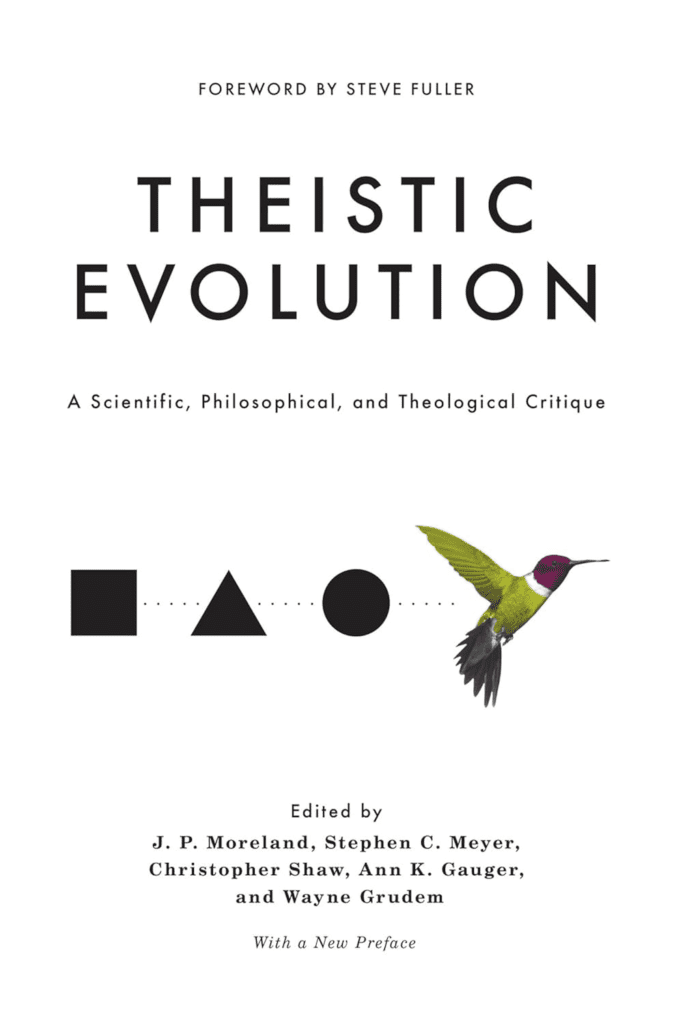
A central pillar of Keller’s argument is the distinction between evolution as a biological process and evolution as a worldview. He insists that one can affirm the former while rejecting the latter. While rhetorically effective, this distinction collapses under scrutiny.
Darwinian evolution has never functioned merely as a neutral biological mechanism. From its inception, it has operated as a comprehensive explanatory framework—one that seeks to account for life, morality, purpose, and human identity without reference to God. Keller himself acknowledges this worldview dimension, yet simultaneously urges Christians to accept evolution in some form.
This equivocation creates confusion. If macroevolution—one biblical “kind” becoming another—is a scientific fact, observable and repeatable, then Christians are compelled to accept it. If it is not, then it functions as a competing religion and must be resisted, not accommodated. Keller never resolves this tension. Instead, he relies on appeals to scientific consensus, conflating the agreement of scientists with the conclusions of science itself.
History demonstrates the danger of this move. Numerous scientific theories once widely accepted—luminiferous ether, spontaneous generation, phlogiston—have since been abandoned. Consensus is not synonymous with truth.
In a BioLogos paper titled “Creation, Evolution, and Christian Laypeople” (2012), he states, “I think there was a real Fall. I think that happened. I also think that there also was a very long process… there must have been death [before the Fall]… The biblical account of creation is not messy.” He argues for compatibility between evolution and faith, viewing Genesis as poetic rather than historical.
However, accepting evolutionary theory (even theistic evolution) creates problems in how we understand the origin of man and sin. Did Adam evolve? At what point along the evolutionary process did apes become human and created in the image and likeness of God? What about sin? If a historical Adam did not exist but rather a group of evolved apes, this makes no sense of the Bible’s own claim that through Adam sin came into the world and all men received his fallen nature. It also destroys redemption in Christ since, “‘For as in Adam all die, so also in Christ shall all be made alive.” (1 Corinthians 15:22). In fact, Paul’s whole logic of the Gospel would break down,
Therefore, just as sin came into the world through one man, and death through sin, and so death spread to all mene because all sinned—for sin indeed was in the world before the law was given, but sin is not counted where there is no law. Yet death reigned from Adam to Moses, even over those whose sinning was not like the transgression of Adam, who was a type of the one who was to come… For if, because of one man’s trespass, death reigned through that one man, much more will those who receive the abundance of grace and the free gift of righteousness reign in life through the one man Jesus Christ.” (Romans 5:12-14 & 17)
Keller’s Weak Evidence
The evidence Keller appeals to does not support Darwinian macroevolution. What has been observed is adaptation within limits: speciation, variation, and microevolution. These phenomena are entirely compatible with a biblical doctrine of fixed kinds.
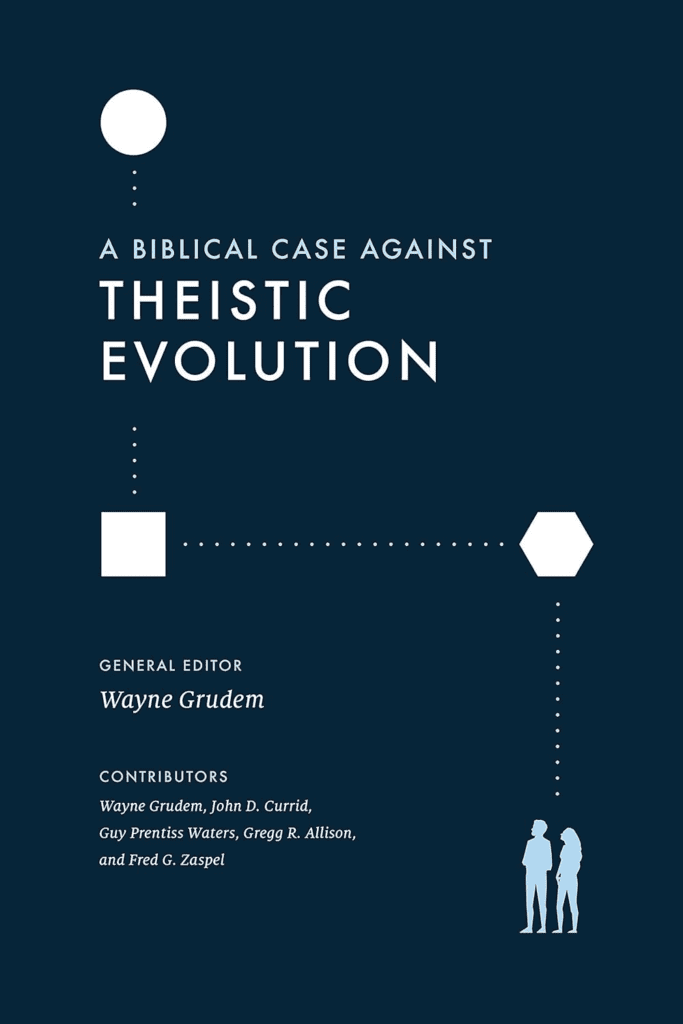
The classic example of Darwin’s finches illustrates this point. Changes in beak size occur in response to environmental pressures, but these changes are reversible and remain within a defined biological range. No observation demonstrates one kind becoming another. To assert otherwise requires extrapolation beyond the evidence—an act of faith, not science.
By presenting evolution as though it enjoys the same empirical footing as observable science, Keller misleads his audience and lends credibility to a theory that lacks demonstrable proof at its most critical point.
Keller’s involvement with BioLogos further exposes the nature of his project. BioLogos explicitly affirms common descent and the god-ordained process of evolution as the best explanation for biological diversity. While rejecting atheistic naturalism, it nevertheless adopts the core claims of Darwinian theory.
This attempt at synthesis results in syncretism. Evolution is treated as both a worldview and not a worldview, both compatible with Christianity and in need of theological correction. The result is confusion rather than clarity. If evolution functions as a grand theory of everything, attempting to incorporate parts of it while rejecting its foundational assumptions is no different than selectively adopting elements of Islam or critical theory. A system that claims comprehensive explanatory power cannot be safely compartmentalized.
Redefining the Role of the Pastor
Perhaps the reason why Keller operated this way is rooted in his understanding of the pastoral office. He explicitly describes the pastor as a “bridge between the world of scholarship and the world of the street and the pew.” This self-understanding shapes everything about his ministry.
The biblical model of pastoral ministry emphasizes guarding the flock, teaching sound doctrine, and refuting error (1 Tim. 3:1-7; Tit. 1:5-16). Keller’s model prioritizes mediation, translation, and respectability. Sermons become intellectual TED Talks. Scripture shares authority with philosophers, psychologists, and cultural theorists. The pastor becomes an interpreter of elite opinion rather than a steward of divine revelation. Difficult doctrines are softened or sidelined in the name of accessibility.
This is not what the pastoral office is meant to be, and this downgrade has caused untold damage within the Evangelical church by pastors who act like hired hands instead of faithful shepherds. Pastors are not called to build bridges between Christianity and its rivals; they are called to proclaim truth, refute error, and shepherd souls. Keller does not go as far as some. Yet by opening the door, he invites others to walk through it. The cost is not merely confusion about origins, but erosion of confidence in God’s Word and a redefinition of pastoral ministry itself.
The church does not need a Christianity tailored for elite approval. It needs courage to stand on Scripture, even when that Scripture offends the sensibilities of the age. Anything less is not faithfulness—it is surrender.
Keller’s Third-Way-ism Pushed the Church Leftward

Keller’s “third way” approach to politics—neither fully left nor right—has been accused of subtly steering Christians toward progressive social positions while critiquing conservative ones more harshly.
In his New York Times op-ed “How Do Christians Fit Into the Two-Party System? They Don’t” (2018), he writes, “Christians should be involved politically as a way of loving our neighbours… To work for better public schools or for a justice system not weighted against the poor or to end racial segregation requires political engagement.” He adds, “The biblical commands to lift up the poor and to defend the rights of the oppressed are moral imperatives for believers,” and “Racism is a sin, violating… ‘love your neighbour.'”
While these statements align with biblical calls to justice (e.g., Micah 6:8), they echo left-leaning social justice narratives, emphasizing systemic issues like racial injustice and wealth redistribution without equal emphasis on personal responsibility or conservative priorities like abortion. Harris, in his episode on the church’s mission, critiques Keller’s elevation of social action to parity with evangelism, as seen in the 2011 Mission Manifesto Keller signed, which equates gospel proclamation with societal welfare. Harris argues this mission drift transforms the church into a social activist entity, aligning it with progressive causes to gain cultural approval, but it subverts the Great Commission’s focus on disciple-making (Matthew 28:19-20).
Also, let’s not forget that time that Keller said that if you have white skin, you should feel guilty because it’s worth a million dollars… This is pure pandering to critical race theory and secular social justice.

Also, Keller pushed the COVID narrative hard, platforming then director of the NIH, Francis Collins as a trustworthy voice that Evangelicals should listen to, lauding him as a “modern day Daniel”. I have documented this and more in another article. Keller continued to promote left-leaning attitudes and narratives during the pandemic—all of which have been thoroughly shown to be false now.
Keller’s hermeneutics, as critiqued in Engaging with Keller, rely on parables (e.g., the prodigal son) to define faith, using secondary aspects for main warrants, like interpreting Numbers 12 as anti-racism rather than about authority. Keller’s “hermeneutical spiral” integrates sociological and economic preconceptions, denying historical-grammatical exegesis. For example, Keller’s use of the prodigal son to argue that law-keeping equates to rebellion, a fallacy that equates conscientious obedience with moral failure, contradicting Romans 7:12 (“the law is holy, and the commandment is holy and righteous and good”).
In Generous Justice (2010), Keller states, “Doing justice includes not only the righting of wrongs but generosity and social concern, especially toward the poor and vulnerable.” He interprets Jubilee laws as supporting wealth redistribution, which Engaging with Keller refutes as a misunderstanding, noting Jubilee preserved property and was repudiated by the Westminster Confession. In a sermon, he says, “You care about the poor. When you see people without resources, your heart goes out to them. If it doesn’t, maybe you’re saved, but you’re lacking the evidence of salvation. Justification leads to justice.” This redefines the gospel to include works, akin to the Galatian heresy. This shift, Harris contends, pressures Christians to adopt progressive stances on issues like racial equity to prove their gospel fidelity, as Keller implies in a 2019 sermon that evangelism without visible “racial justice” care makes the church seem power-hungry.
Keller’s political both-sides-ism is evident in a 2020 X post: “As anyone knows who has listened to my preaching over the years, I have always, incessantly, equally critiqued the positions of the Left and the Right.” However, in interviews, he attributes cultural hostility to the “Christian right,” saying, “For the last 20 years, the Christian right… They just said awful things and vilified people…… We nurtured this.” Keller’s terrible takes on abortion are another issue.
He seems to equivocate that both the political Left (US Democrats) and Right (US Republicans) are somehow equally legitimate options for Christians. However, the Democrats are unhinged in their support and promotion of abortion without any limits, whereas there is some restraint with the Republicans, and even many explicitly pro-life Republicans are trying to advance bills to abolish the child sacrifice. For the Democrat party, abortion is its untouchable sacrament. You simply cannot be a Democrat today and even think about opposing abortion in any form.
The two are clearly not equal, but Keller’s third way obscures this through pretended neutrality that actually pushes the church leftward. Conservative commentators such as Allie Beth Stucky, Seth Gruber and Abolitionists Rising have critiqued his terrible take on the issue.
This is not an isolated event. Keller routinely would punch right and coddle left. It seemed like a pattern for him to chastise the conservative right but then frame the liberal left as “misunderstood” and really just trying to be compassionate. James Wood in First Things (2022) argues this “third way” accommodates urban elites, potentially leading to liberal views on issues like sexuality. Michael Young in American Reformer’s “The Keller Approach” (2024) notes Keller’s acknowledgment that progressives first imposed worldviews, but his chastising of conservatives fosters unequal justice to curry leftward favour.
His Manhattan context probably had a lot to do with this, since he would tailor his message to New York urbanite sensibilities. For example, in his book on marriage, entitled “The Meaning of Marriage,” he does not at all talk about having kids! That is one of the main purposes of marriage biblically (Gen. 1:27–28; Psa. 127:3–5; Psa. 128:3–4; Mal. 2:14–15, etc)—but it does not jive well with the metropolitan crowd he was trying to appeal to. Another example is in his book, “Every Good Endeavour”, which talks about different careers or vocations both men and women could be called to, does not ever talk about motherhood as a primary calling for women (Gen. 3:20; Prov. 31:27–28; Isa. 49:15; 1 Tim. 2:15; 1 Tim. 5:10-14; Tit. 2:4–5). Perhaps because that would cut against a culture steeped in feminism.. You would think that if you wrote a whole book on a biblical perspective on marriage or vocation, you’d at least have a chapter on parenting or motherhood. These are not little oversights, but rather missing some of the main biblical purposes of the topic his books were meant to equip Christians on. But Keller continued to pander to the leftist sensibilities instead of challenging the liberal assumptions of his audience with a truly biblical framework.
In Megan Basham’s excellent book Shepherds for Sale: How Evangelical Leaders Traded the Truth for a Leftist Agenda, she cites Federal Election Commission (FEC) records to highlight political donation patterns among staffers associated with Timothy Keller’s church network and preacher-training ministry at Redeemer Presbyterian Church in New York City. Specifically, Basham states:
“Though only a handful of staffers at Keller’s church network and preacher-training ministry have donated to political campaigns since 2015, those who did, donated frequently, and according to Federal Election Commission records, gave exclusively to Democrats.”
This data is presented as evidence of liberal leanings within the leadership and network surrounding Redeemer, suggesting an alignment with Democratic political positions on social and political issues. This is no surprise given the practical impact of Keller’s third-way-ism. Basham uses this to argue that progressive influences have permeated evangelical institutions, including those connected to Keller, potentially shaping the church’s environment to be more accommodating to left-leaning views. She notes the case of Kirsten Powers, a pro-abortion and pro-same-sex marriage political operative who attended Redeemer but left feeling “deceived and betrayed” upon discovering its formal conservative positions on these issues after years of involvement. If Keller was really clear on these issues, how could someone go to his church for years and not know this? This implies the church’s environment may feel welcoming to those with liberal views.
In a “negative world,” as per Aaron Renn, Keller’s winsomeness assumes good-faith dialogue, but it fails against opponents who view orthodox views as odious, leading to compromised truth. This has contributed to liberal drift in evangelicalism, with Keller’s legacy seen as “very good and very bad,” promoting both-sides-ism that ruined millennials’ political morality. Keller’s accommodations have weakened Evangelical resolve against cultural pressures, fostering a church more attuned to secular approval than biblical fidelity, as evidenced by PCA debates over liberalism influenced by Keller’s legacy.
So, was Tim Keller a Heretic?
The evidence from Keller’s own words and critiques from conservative sources reveals a theology that, while innovative in outreach, introduces unorthodox elements and shifts the church leftward. This has fostered a more accommodating and compromising evangelicalism, at the cost of doctrinal fidelity. Believers must weigh these concerns against Scripture, holding fast to the historic faith once delivered to the saints (Jude 3).
As to whether Keller was a heretic—that’s a heavy word to throw around, and we should not use it lightly. In my opinion, it seems like he had some very serious theological errors on some primary issues like sin and the Trinity. Combined with his liberal tendencies and the effect he has had to push the church leftward, I think that Keller could at least be labelled a false teacher in these regards and that people should be warned to ingest his material cautiously and critically. Personally, I cannot recommend him as a trustworthy source—especially when there are many more solid and conservative sources abounding who would offer just as much or more insights than Keller but without the complication of his unorthodox theology. Whether he was saved or not, I leave that to the LORD who judges perfectly.
Give God glory for whatever good he brought from Keller’s life, but continue to be on guard and never elevate any man (not even this man) above Scripture and God’s standards.
For more on Keller, Jon Harris has an excellent series (to which this article owes a lot) Engaging Tim Keller here.