I don’t normally do this, but our family has been researching more into Christian Classical Education curricula for our son to start homeschooling. As is usually the case, we’ve been doing our deep dives, reading and researching. We recently used an AI tool to help compare and summarize the key differences between the three Classical Christian curricula we’ve been considering.
With that in mind, I’m by no means an expert, nor do I claim to be. I have greatly been aided by Doug Wilson’s book, The Case for Classical Christian Education and numerous reviews, videos, podcasts and articles.
What you will find below is the AI summary. So, read it accordingly. Do your own research and seek wisdom from those who’ve gone down the path before. After all, if you’re doing Christian Classical Education, it’s because you’re not trying to reinvent the wheel but use what has worked for centuries!
I’m not promoting one curriculum over another. My family has simply been trying to figure out our approach to Classical Education in homeschooling. However, I’m posting this in case other families who are on a similar journey may find it helpful.
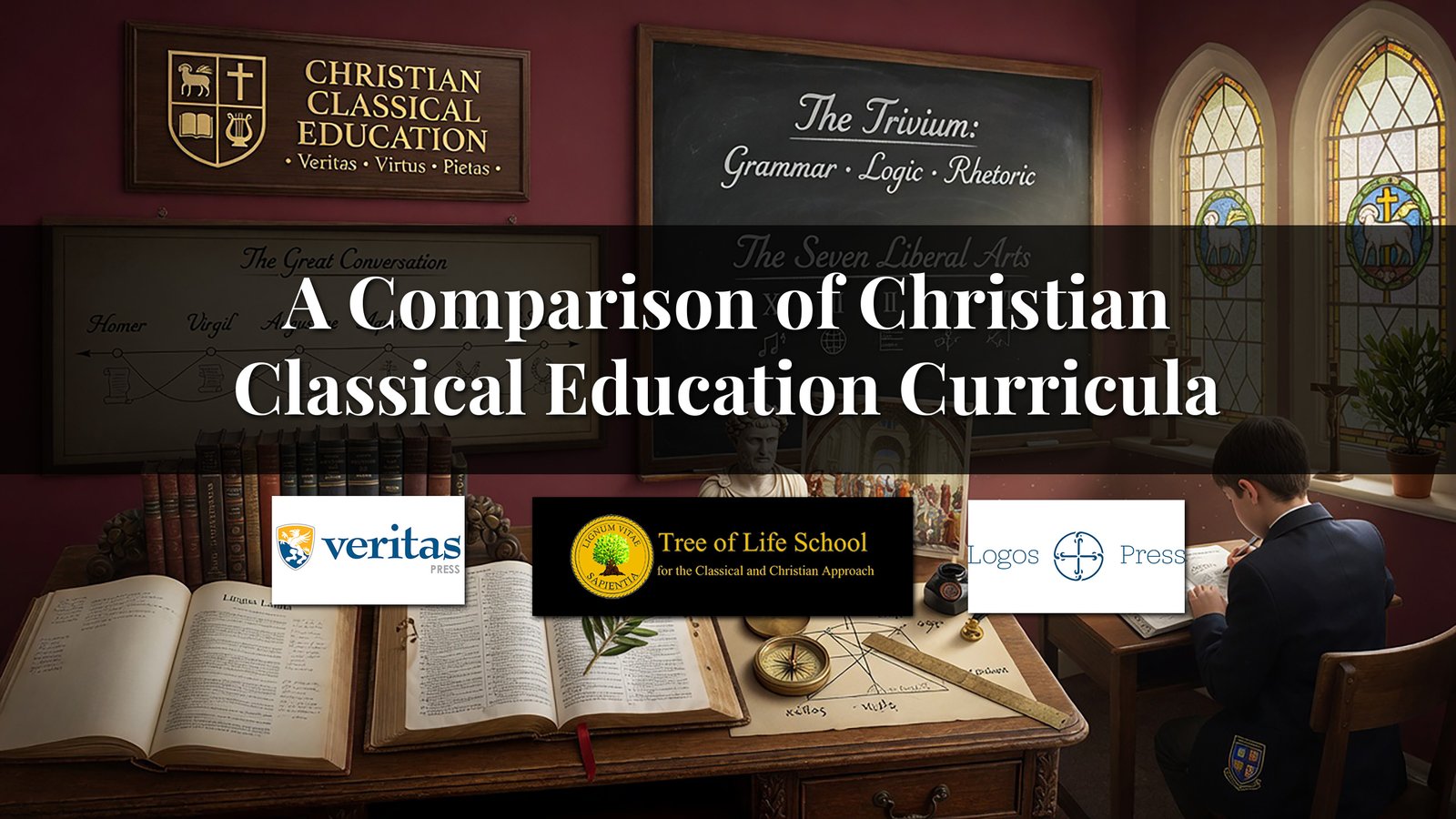
Tree of Life School & Book Service, Veritas Press, and Logos Press (with Logos Online School) are all established providers of Christian classical homeschool curricula rooted in the Trivium (grammar, logic, rhetoric stages), biblical worldview integration across subjects, and Western civilization’s great books/ideas. They emphasize critical thinking, virtue formation, and faith-centred education rather than modern progressive models. All are parent-directed to varying degrees but differ significantly in structure, delivery options, scale, customization, cost, and emphasis.
I drew from official websites (treeoflifeathome.com, veritaspress.com, logospressonline.com, logosonlineschool.com), Cathy Duffy Reviews (a respected independent homeschool evaluator), user testimonials on provider sites and forums (e.g., Well-Trained Mind, Facebook classical education groups), blog reviews (e.g., HomeschoolCurriculum101, Teach Diligently), and parent experiences shared publicly. No standardized test score comparisons or large-scale studies exist publicly for these specific programs (common in homeschooling), so “learning outcomes” rely on provider claims, alumni/parent testimonials, and reviewer observations about college prep, critical thinking, and faith formation. I avoided speculation and noted limitations where data is anecdotal or limited (especially for the smaller/nicher Tree of Life).
Key Differences in Learning Options and Formats
- Tree of Life (Canadian-based, serving ~500 students since 1994, ACCS affiliate): Primarily parent-led with high customization and support. They create individualized study plans, recommend/purchase books, provide feedback/evaluation of student work, and host online class discussions for select courses. Their own integrated programs include Small Steps to Big Ideas (Gr. 4–6), What’s the Big Idea? (Gr. 7–8), and Great Ideas Through Great Books (Gr. 9–12). These are guide-based, blending history, literature, logic, writing, and biblical truth. Minimal video/live options; focus is relational/supportive hybrid. Good for families wanting guidance without a full online school.
- Veritas Press: Most flexible and multi-format (K–12). Options include: You-Teach (open-and-go lesson-plan packages for parent-led), Self-Paced (interactive video courses with quizzes/games), Live Online classes (teacher-led with peers), and Veritas Scholars Academy (full accredited online school with advisors, transcripts, diploma). Mix-and-match possible. Strong proprietary materials (e.g., history/Bible cycles, Omnibus great-books program, Phonics Museum, early Latin).
- Logos: Structured bundles for elementary + live online for secondary. Logos Press offers complete homeschool starter bundles (Gr. 1–8, ~$400–800 per grade) with daily lesson plans covering Bible, English, history, literature (worldview guides), Latin (Kraken series from Gr. 3+), logic, math, science (Noeo), spelling/writing—mostly parent-led. Logos Online School (Gr. 7–12) features daily live teacher-led classes (Mon–Thu), nationally accredited (NAPSS/NCAA-approved), full-time ~$2,668/year or à la carte. Canon+ streaming for some courses. Influenced by Douglas Wilson/Canon Press (strong “paideia of God”/cultural engagement emphasis).
Costs (approximate, based on current/public info; vary by options/grade): Tree of Life—per-course or service-based (e.g., ~$650 for some online classes; books/plans extra). Veritas—packages ~$750+ per grade (higher with live/academy). Logos—most affordable for bundles; online school is competitive for full-time.
Strengths and Weaknesses (Pros and Cons)
Tree of Life School & Book Service Pros:
- Highly personalized/customized plans reduce parent overwhelm and allow tailoring to child/family needs (e.g., pace, interests).
- Strong relational support (work feedback, online discussions, evaluations) fosters parent-child co-learning and accountability without full outsourcing.
- Engaging, in-depth yet accessible programs emphasize history, great books, logic, creative writing, biographies, music/art—parents report kids actually enjoy reading/pushing themselves.
- Canadian focus (convenient shipping, possible provincial alignment for Ontario users); biblical truth integrated practically across subjects.
- Long track record (30+ years) with positive parent testimonials on enjoyment and skill-building.
Cons:
- Less “plug-and-play” than packaged options; relies more on the service model and parent execution.
- Fewer proprietary video/live/full-school options; not ideal if you want heavy teacher-led structure.
- Limited public/external reviews and outcome data (smaller/niche Canadian service; most feedback is on their site).
- May require more parent time for coordination vs. fully online models.
Veritas Press Pros:
- Exceptional flexibility suits diverse family schedules/styles (parent-led, self-paced videos, live, or full academy).
- High-quality, rigorous materials (e.g., Omnibus, history cycles integrating Bible/church history, early Latin) praised by Cathy Duffy and users for depth, engagement, and classical excellence.
- Strong biblical worldview formation and critical thinking; reviewers note outstanding academic results and college readiness.
- Large scale with proven support (100k+ families, 30+ years); mix-and-match allows customization.
- Positive user experiences: “Rigorous…produces outstanding results,” “best classical Christian education,” kids challenged/growing in knowledge.
Cons:
- Can be intense/rigorous (workload, pace); some families find it overwhelming without using online options.
- Higher cost for premium/live/academy tracks.
- Less emphasis on hyper-personalized service vs. Tree of Life; more standardized packages (though flexible).
- Requires commitment; parent reviews note it’s “a serious commitment” but worth it for results.
Logos (Press + Online School) Pros:
- Excellent value/completeness in elementary bundles (all subjects covered with lesson plans; strong Latin/logic/lit worldview integration). Affordable and “open-and-go.”
- Daily live online classes (Gr. 7–12) provide structure, peer interaction, and teacher accountability in a classical Christian environment.
- Robust philosophy (Christ-centred paideia, cultural impact); high reputation via associated Logos School. Users praise rigour, critical thinking, Scripture-grounded discussions, and enjoyment.
- Accredited/NCAA-approved for secondary; testimonials highlight changed problem-solving, lasting friendships, and faith integration.
Cons:
- Elementary is mostly parent-led bundles (less delivery flexibility than Veritas).
- Online school starts at Gr. 7; no equivalent full K–6 live option.
- Theological/cultural emphasis (Canon Press/Douglas Wilson) may feel specific or polarizing for some families.
- Fewer extensive public homeschool reviews than Veritas (stronger in classical circles/forums).
Learning Outcomes and Results
All three emphasize Trivium-based skills (facts/memorization → reasoning → persuasive expression), biblical integration, and preparation for faithful Christian life/college/career. Outcomes are primarily testimonial/anecdotal:
- Tree of Life: Parents report high engagement, improved reading/writing/logic skills, enjoyment of history/great books, and relaxed yet effective learning. One Ontario testimonial family noted long-term success (children pursued MA, arts, certifications). Focus on whole-person formation; no broad public test/college data, but ACCS affiliation and 30-year history suggest solid classical results.
- Veritas Press: Strongest documented outcomes. Graduates accepted to top universities/service academies; high average scholarships (~$45k in some mentions). Reviewers and parents highlight rigorous prep leading to college-level English being “easier,” a deep biblical worldview, and critical thinking. Self-paced/live options support consistent progress and high achievement.
- Logos: Testimonials emphasize critical thinking, Scripture-centred problem-solving, and cultural engagement. Online school parents note “rigorous yet exciting” courses, better than public school discourse, and college-prep readiness (accreditation helps). The associated brick-and-mortar Logos School has a strong reputation; elementary bundles are praised for building foundations effectively.
Common strengths across all: Strong faith formation, classical methods producing independent thinkers/readers/writers, and positive parent/kid experiences when matched to family style. Differences stem more from delivery and personalization than core philosophy.
Summary Conclusion: Why Parents Would Choose One Over the Other
Choose Tree of Life if you want personalized Canadian support, a relational hybrid model that reduces planning stress, and an engaging integrated program for hands-on parent-child learning—ideal for families in Ontario/Toronto seeking guidance without full outsourcing or high costs. It’s best for those who value customization and support over pre-packaged video/live options.
Choose Veritas Press for maximum flexibility, top-tier rigorous materials, and a proven track record of strong academic/college outcomes with biblical depth. It’s the “gold standard” for families wanting options from fully parent-led to full online academy, especially if you desire extensive self-paced videos or live classes and don’t mind the intensity/commitment.
Choose Logos for affordability, complete structured bundles in elementary (with excellent Latin/logic focus), and daily live teacher-led classes in secondary—great for parents seeking value, clear daily plans, and a bold Christ-centred cultural engagement approach without Veritas-level expense or Tree of Life’s customization emphasis. It’s particularly strong if you like the Canon Press/Wilson classical revival style.
Ultimately, the best fit depends on your family’s location (Tree of Life advantage in Canada), desired parent involvement vs. structure, budget, child’s learning style, and tolerance for rigour. All three have strong Christian classical reputations and satisfied users; visit their sites for samples/consultations, and consider your child’s age and your long-term goals (e.g., full diploma path). Many families blend elements across providers. If your priorities shift (e.g., more online structure as kids age), Veritas or Logos scale well. Research further with free consultations from each.